
Professorship of Sustainable Supply Chain Management
The Professorship of Sustainable Supply Chain Management is part of the Faculty of Business Administration at the University of Sustainability. Research topics focus on the development and analysis of environmental and sustainable design and management options in production, trade, and logistics.
Accordingly, the teaching — both research-oriented and practice-focused —covers topics such as sustainable supply chain management, meso logistics and collaborative decision-making, supply chain resilience, circular economy, corporate supply chain due diligence, freight villages and coopetition, post-fossil freight mobility, product-service systems and value-added services, cloud logistics, and demand chain management.

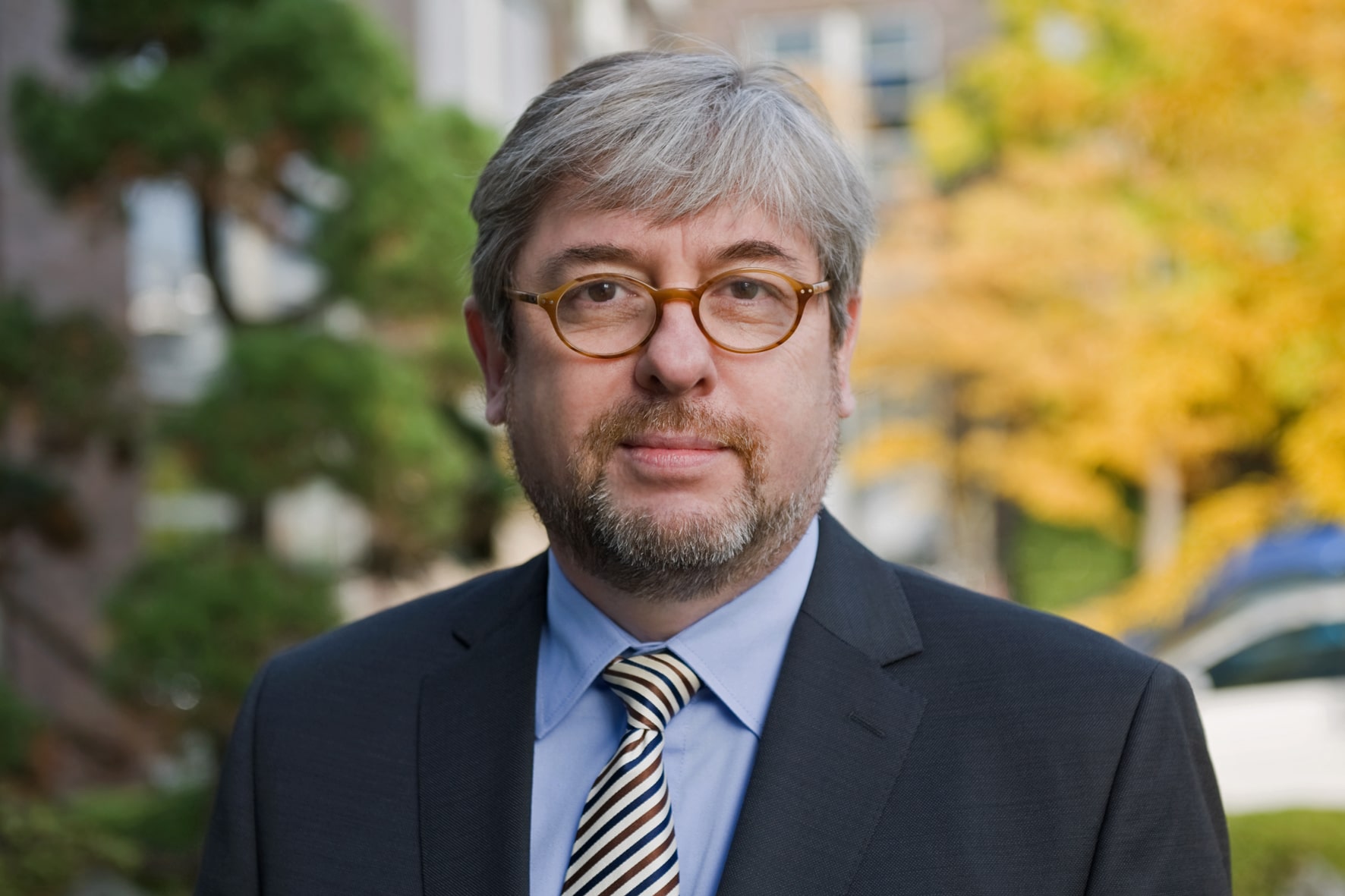
Univ.-Prof. Dr. Dr. h.c.
Hans-Dietrich Haasis
Teaching and Research Area „Sustainable Supply Chain Management“
For more than 40 years, Professor Haasis has been engaged in research and teaching on environmental and sustainable developments in production, trade, and logistics worldwide. He combines scientific insights with entrepreneurial design opportunities. Numerous research and development projects, as well as a large number of successful students, attest to his highly accomplished academic work.
Research
Our research focuses on identifying, developing, and analyzing environmental and sustainable design and management options in production, trade, and logistics. A distinctive feature of this work is the combination of scientific insights with entrepreneurial design possibilities. Exemplary research areas include:
- Sustainable supply chain strategies in production, trade, and logistics
- Coopetitive collaboration models in freight villages
- Supply chain finance and compliance with supply chain due diligence obligations
- Sustainable circular economy concepts and product-service systems
- Urban closed-loop supply chains and decentralized production
- Digital transformation and self-regulating processes
- Knowledge management to improve collaboration along the supply chain
- Innovation management for sustainable business solutions
- Cultural influences on decision-making behavior along a supply chain
